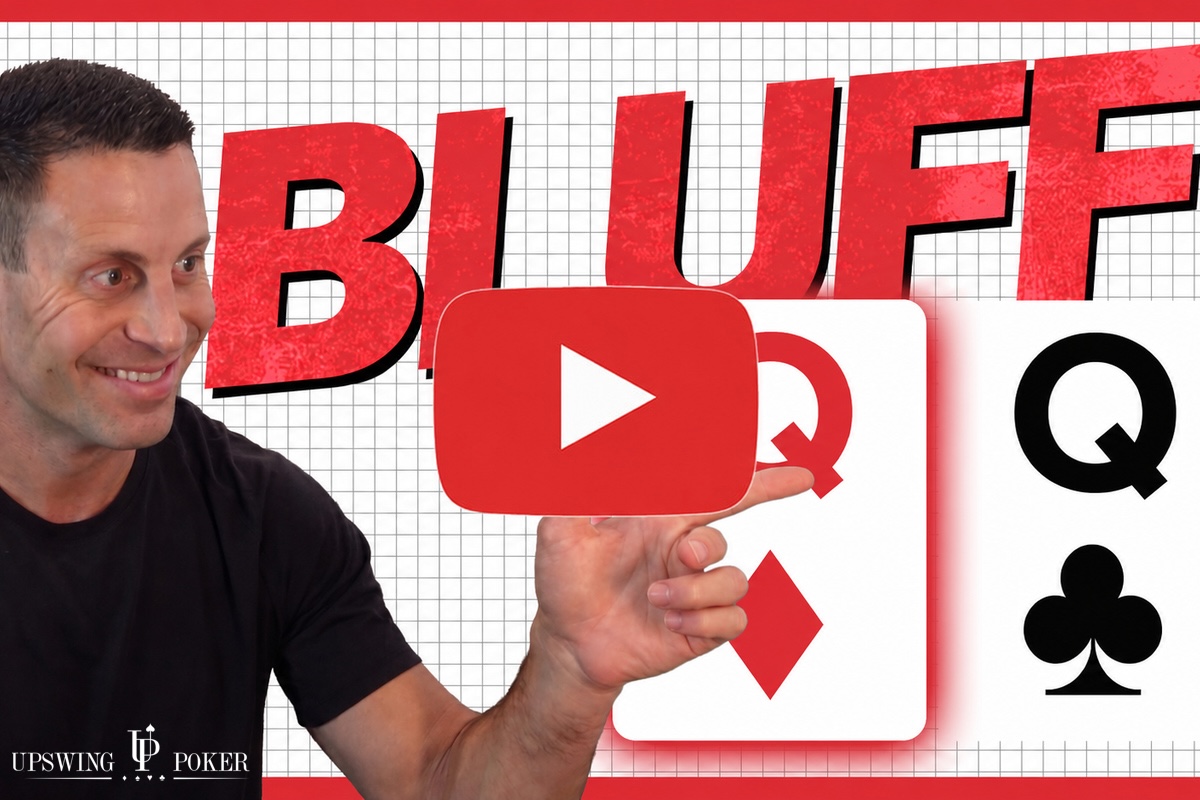
Garrett Adelstein faced a brutal river decision in a high-stakes Hustler Casino Live cash game back in September 2022, and his response reveals why he has become one of the most feared players in live poker's streaming era.
Playing pocket queens, Adelstein found himself up against Aaron Zhang's river overbet of $15,000. The board texture had evolved to a point where Adelstein's hand ranked as essentially garbage. Most players fold here without hesitation. Adelstein did something far different. He shoved for $60,000.
The move qualifies as a textbook example of advanced river theory in action. Adelstein possessed a hand too weak to call but strong enough to raise, which means his hand qualified as a semi-bluff with theoretical merit. Queens on most river textures carry showdown value in smaller pots, but Zhang's aggressive overbet sizing telegraphed either a monster or a bluff attempting to exploit Adelstein's perceived weakness.
Adelstein's shove transforms the situation entirely. By moving all-in, he forces Zhang into an impossible decision. Zhang must now decide whether Adelstein holds a value hand strong enough to jam for $60,000, or whether Adelstein exploits the overbet as a bluff-catching opportunity with marginal value. The dynamics shift from a simple call-fold spot into a complex game theory puzzle.
This hand became notable enough to earn analysis from Duncan Smith at Upswing Poker, indicating that poker training sites view Adelstein's decision-making as instructional. The play showcases the evolution of cash game poker where aggression, board reading, and opponent tendencies matter more than hand rankings alone.
Adelstein's reputation as a Hustler Casino Live mainstay stems from exactly this type of play. He combines mathematical precision with psychological pressure, making him a formidable opponent in unscripted, uncapped games where six-figure pots develop regularly. Unlike tournament poker with structured blind levels and predetermined stack sizes, cash games reward adaptability and fearless aggression.
The specific details matter here. Zhang's $15,000 overbet on a river already suggested weakness or a medium-strength hand trying to define Adelstein's range. The overbet sizing creates exactly the type of vulnerability Adelstein exploits. A min-bet suggests strength. A small bet suggests uncertainty. An overbet often represents a polarized range containing either the nuts or complete air.
When Adelstein jams $60,000, he applies maximum leverage to Zhang's decision. Folding loses the $15,000 already invested. Calling requires belief that Adelstein bluffs frequently enough to justify the risk. The human element enters the equation hard.
This hand illustrates why modern poker analysis separates into two camps. Traditional poker logic says fold weak hands faced with aggression. Advanced theory says hand strength matters less than positional leverage, stack depth, and opponent tendencies. Adelstein operates in the second camp with consistent success.
The September 2022 hand demonstrates why streaming platforms like Hustler Casino Live have become valuable resources for serious poker students. Real money, high stakes, and unfiltered decision-making create teaching moments that chip-stack simulators cannot replicate. Adelstein's $60,000 shove with queens entered poker education because it worked, because it revealed something true about modern play, and because it required the courage to trust mathematics over instinct.