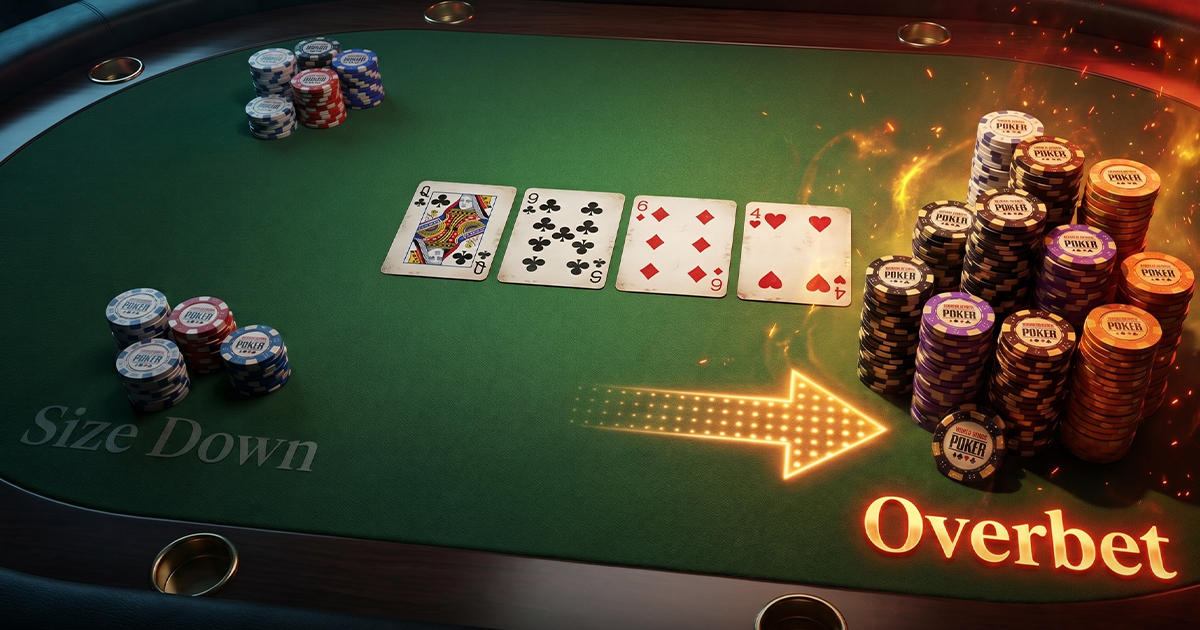
Turn betting sizes separate winning players from the rest of the field. The difference between a 25% pot bet and a full pot-sized bet on fourth street can swing your hourly rate tens of dollars an hour at mid-stakes games.
The core principle: bet big when you need protection or want to build the pot with a strong hand. Bet small when you're either bluffing or facing significant uncertainty about your hand strength relative to your opponent's range.
Three spots demand oversized turn bets. First, when you hold a strong made hand and face multiple draw possibilities. If you're on the turn with top pair, top kicker against a opponent who could hold any flush draw, open-ended straight draw, or gutshot, larger sizing denies pot odds and protects your equity. Second, when you've built the pot preflop and continuation bet the flop with a premium hand like overpair or two pair. Maintaining sizing consistency and getting value matters here. Third, when you need to charge draws explicitly. If the river is a brick-heavy card that kills most draws, bet big on the turn to make draws pay now rather than hope they brick out.
Three spots call for smaller, more measured turn bets. First, when you're taking a bluff with weak holdings and need to control pot size. A small bet keeps your downside manageable if called. Second, when you're building a check-raising range and want to keep the pot manageable before letting your opponent barrel again. Third, when facing uncertain situations where your hand could be either best or worst depending on your opponent's exact holdings. Smaller sizing prevents you from overcommitting with marginal strength.
Position matters throughout. In position, you control the action and can adjust after seeing reactions. Out of position, larger sizing protects you from multiple barrel streets where your opponent controls the action.
Successful turn play means matching your