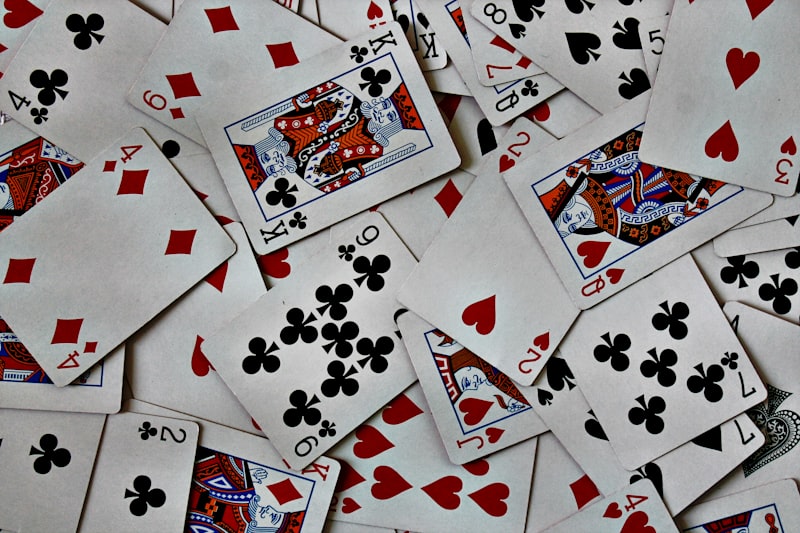
The consensus among poker media and streamers is straightforward: more content equals a healthier ecosystem. Educational videos, hand breakdowns, personality-driven broadcasts, joke compilations, strategy deep-dives on obscure variants. The reasoning feels airtight. More eyeballs on poker. More engagement. More legitimacy.
But what if the real question isn't whether content creation is good for poker, but rather what this relentless production cycle is actively breaking?
Start with the obvious observation: poker content has exploded. High-stakes cash game analysis, tournament coverage, comedy bits, and niche format tutorials are everywhere. Sponsorships follow creators with audiences. Publishers chase clicks. Streamers build empires. On the surface, this looks like growth.
The problem emerges when you step back and ask what gets crowded out.
Content production, especially at scale, demands consistency and velocity. You need new material constantly. This creates an incentive structure that subtly but measurably shifts what gets made. Complex, ambiguous situations that require genuine uncertainty don't perform as well as confident hot takes. Hands that are actually unclear get framed as obvious exploits or mistakes. Nuance becomes drag.
This matters because poker is fundamentally a game about incomplete information and probability. It rewards thinking in shades of gray. Yet the content ecosystem increasingly rewards content creators who simplify, categorize, and declare winners and losers.
The secondary problem is attention distribution. Strategic depth still exists in poker. But if a newer or casual player's first dozen exposures to the game come through entertainment-first content, joke compilations, or simplified tactical patterns, they're not getting calibrated to the actual cognitive demands of playing well. They're getting conditioned to consume poker as spectacle.
This isn't an argument against poker content existing. It's an observation that the current incentive structure may be optimizing for metrics that don't correlate with either player development or honest game analysis. A hand breakdown that confidently declares a play "exploitable garbage" generates more engagement than one that says "this is situation-dependent and depends on your read of this specific opponent's tendencies."
The question worth asking: What type of poker knowledge and skill development does this ecosystem starve?
Consider that serious study used to require books, personal coaching, or grinding experience. It was slower. Less accessible to some. But the filtering mechanism was brutal. If you invested time in understanding poker deeply, you were probably serious about it. Today, someone can consume 40 hours of poker content and still not understand pot odds, position value, or why hand selection matters.
The content ecosystem isn't responsible for individual player education choices. But it does shape what information is available, what gets repeated, and what gets normalized as "how poker works."
None of this is malicious. Content creators aren't conspiring against poker's integrity. Publishers aren't trying to dumb down the game. Streamers are responding rationally to algorithmic incentives and audience preferences. The system is working exactly as designed.
The design itself may be the problem.
A healthier version might look different. More tolerance for ambiguity in content. Less pressure for constant novelty. Room for educational material that's genuinely difficult and unsimplified. Platforms that reward depth as well as entertainment value. Creators who resist the gravitational pull toward hot takes.
This isn't likely to happen organically. Entertainment economics favor the current structure. But recognizing what this structure optimizes for and what it prevents is the first step toward asking whether we want that outcome for poker's future.
The content boom is real and not going away. The better question is what it's costing us.