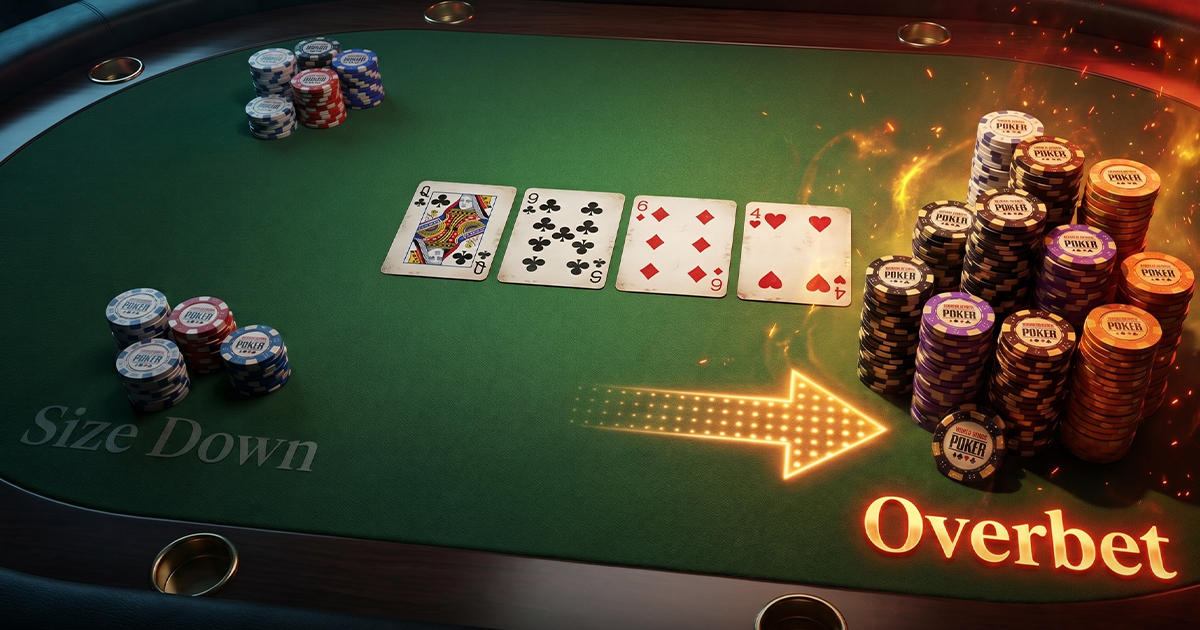
Turn bet sizing separates winners from losers in poker. The difference between a small bet and a large bet on fourth street can swing thousands of dollars over a year of play, yet most players lack a systematic approach to this decision.
The turn presents six distinct scenarios. Three demand aggressive sizing. First, when you hold the nuts or a near-nuts hand in position after your opponent checks to you, bet big. Your hand strength justifies extraction, and they cannot credibly call with marginal holdings. Second, when you have a strong value hand facing multiple opponents out of position, larger bets deny proper odds to drawing hands and simplify the decision tree. Third, when executing a semi-bluff with strong equity and fold equity, oversizing creates maximum pressure on hands like medium pairs and ace-high combos that occupy your opponent's checking range.
Three spots call for restraint. First, when you hold a marginal hand on a paired board and face aggression, a large bet commits you to a value proposition that may not exist. Smaller sizing keeps the pot manageable while you gather information. Second, when playing against aggressive opponents who float the flop with wide ranges, they will respond to oversizing by check-raising frequently. A medium bet accomplishes your extraction goals without triggering their aggression unnecessarily. Third, when the run-out offers many unfavorable cards that will kill your action on the river, bet smaller. You want to keep your opponent engaged rather than accelerating the hand to showdown where drawing cards arrive.
Position matters throughout. In position, you can bet larger with less risk because you act last on the river. Out of position, your uncertainty increases, justifying smaller, more cautious sizing. Board texture shapes decisions too. Dry boards allow bigger bets because future cards offer less help to drawing hands. Wet boards demand smaller bets because your perceived range remains wide.
The best turn