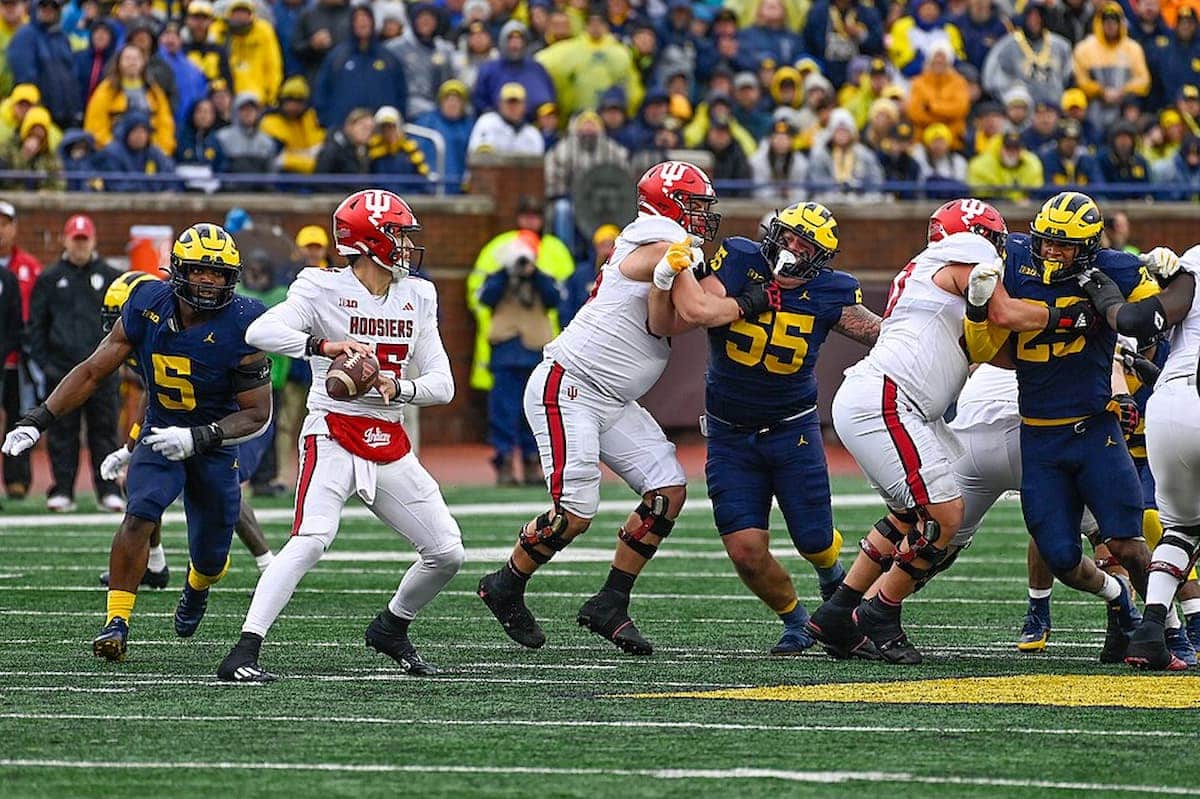
A Texas judge just handed down a decision that could reshape how the NCAA handles gambling violations. Judge Ken Curry issued a temporary injunction allowing quarterback Brendan Sorsby to continue playing for Texas Tech, overturning the NCAA's ban for violating gambling rules.
Sorsby's violation was straightforward. He placed wagers on his own team while playing quarterback for Indiana. The NCAA treated this seriously enough to impose a ban. But Curry's ruling suggests the NCAA's enforcement may have overreached.
This case matters because it breaks from the NCAA's traditional approach to gambling infractions. The organization has historically taken a hard line on any player involvement with sports wagering, treating it as a threat to competitive integrity. Sorsby's case challenges whether that blanket approach holds up in court.
The ruling opens questions about how the NCAA enforces gambling rules across college sports. Other athletes have faced similar bans for wagering violations, but few have mounted successful legal challenges. Sorsby's temporary injunction suggests the NCAA's reasoning or process may not survive judicial scrutiny.
The distinction here is important. Sorsby bet on his own team, not against it. He didn't place bets to gain competitive advantage or throw games. He engaged in behavior the NCAA classified as rule-breaking, but the behavior sits in a gray zone compared to match-fixing or point-shaving scandals that genuinely threaten the integrity of college athletics.
Judge Curry's decision doesn't guarantee Sorsby's permanent reinstatement. The temporary injunction buys him time to continue his career while the case proceeds. But it signals that courts may not rubber-stamp NCAA disciplinary decisions, especially when the harm to competition remains unclear.
This ruling arrives at a critical moment for college sports. As state-level gambling regulations evolve and sportsbooks expand, the NCAA faces pressure to clarify its gambling policies. Outdated