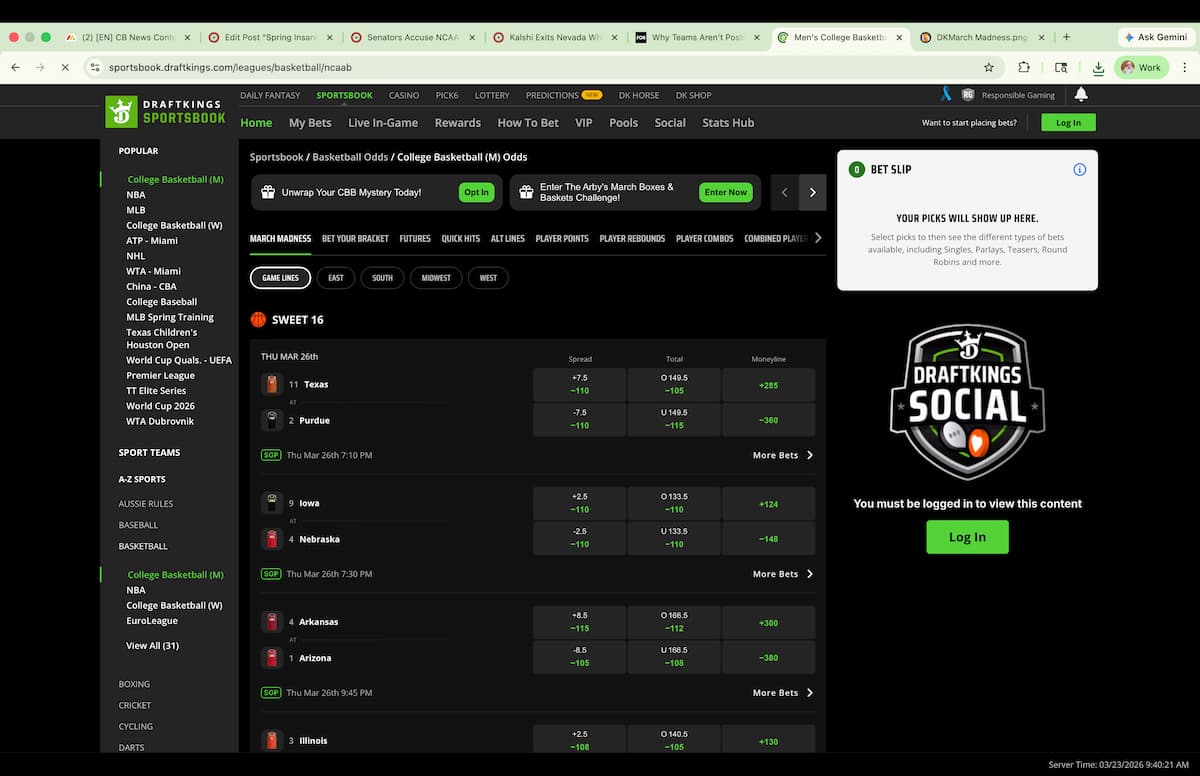
Arizona's sports betting market contracted in March, with handle dropping 5.7% year-over-year to $836.9 million from $887 million, according to the state's Division of Gaming. Colorado reported similar headwinds in betting volume for the month. Yet both states bucked the decline in raw action through improved sportsbook hold percentages, allowing operators to maintain strong revenue despite fewer dollars wagered.
The hold increase tells the real story here. When sportsbooks capture a higher percentage of total handle, it means bettors are losing at better rates for the books. This compensates for reduced volume and keeps profit margins healthy even as player participation softens. Arizona's hold bump was enough to offset the handle decline entirely, delivering solid bottom-line numbers for the month.
March typically brings March Madness volume spikes, so the year-over-year contraction signals potential market saturation or shifting player behavior in both jurisdictions. Arizona's $836.9 million handle still represents a massive market by any measure, but the trend matters. Sportsbooks have grown dependent on consistent hold percentages to cover operational costs and deliver returns to operators.
Colorado's handle figures weren't detailed in available reporting, but the state faced comparable pressures. The West's two largest sports betting markets now show signs of maturation after years of explosive growth following legalization.
For the industry, this pattern repeats across mature state markets. Raw handle growth flattens as penetration peaks, forcing operators to rely on operational efficiency and improved hold rates. Promotional spending wars and competitive pressure typically keep hold rates compressed, so any uptick represents either tightened discipline from sportsbooks or changing player composition. Either way, Arizona and Colorado's March results show the market has shifted from chasing volume to optimizing profitability per dollar wagered.